
Rouge Valley Conservation Centre


To donate to the Rouge Valley Conservation Centre click on the button below:
2019 Rouge Valley Eco Exploration Event
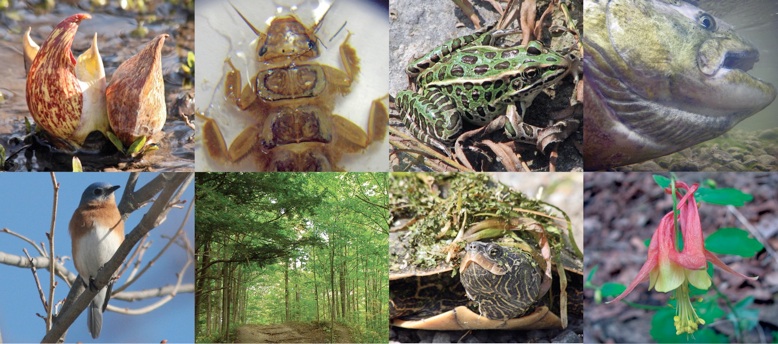
Join us for this great family event on Saturday June 8 and Sunday June 9, 2019! Explore the Rouge Valley and learn about the local ecosystem and its flora and fauna from wildlife experts. Learn about our native mammals, insects, fish, bees, mussels, turtles and birds from the experts while taking a stroll through the beautiful Rouge Valley.
Get your hiking shoes on, bring your camera and take part in our Guided Interpretive Hikes and Kids Eco Station Challenge.
See below for full details or email your questions to events@rvcc.ca
Kids Programs
Special Events
Donate
About Us
DATE: Saturday June 8, and Sunday June 9, 2019
TIME: 10 a.m. - 3 p.m.
LOCATION: Rouge Valley Conservation Centre, 1749 Meadowvale Road (north of Sheppard Ave. E.) in Scarborough
ADMISSION: Free but a suggested donation of $10 per person is greatly appreciated
All money donated goes towards the Rouge Valley Conservation Centre, Educational Programs and Events, and LivingRoom Interpretive Space.
PARKING: Toronto Zoo Parking Lot #4 (located beside the Rouge Valley Conservation Centre); there is no charge for parking.
Thank you to the Toronto Zoo for donating the parking lot to us for our event!
GUIDED WALKS:
Please join us for one of our themed Eco Exploration hikes great for all ages!
You must register to participate in these hikes, please sign up by emailing your name, contact information and number of people in your party to events@rvcc.ca or sign up on the day of the event at the welcome booth. Space is limited.
Saturday June 8, 2019:
Eco Exploration Guided Hike times: 10:30 a.m. - 12:00 p.m. or 1:00 p.m. - 2:30 p.m.
Join us as we visit each of our experts and learn about our local species and ecology of the area.
Please wear appropriate footwear (hiking shoes or boots, running shoes; no open toed shoes or sandals). Bottle of water, hat, sunscreen and insect repellant with DEET are highly recommended. Please note, there is poison ivy along the trails and the possibility of ticks. Please read our Hiking Rules and Precautions and Ticks in the Rouge information below.
Sunday June 9, 2019:
Entomology (insect) Hike time: 10:30 a.m. - 12:00 p.m.
Join Entomology expert Antonia Guidotti from the Royal Ontario Museum as she takes you on a discovery hike of the insects found in the Rouge.
Eco Exploration Guided Hike times: 10:30 a.m. - 12:00 p.m. or 1:00 p.m. - 2:30 p.m.
Join us as we visit each of our experts and learn about our local species and ecology of the area.
Please wear appropriate footwear (hiking shoes or boots, running shoes; no open toed shoes or sandals). Bottle of water, hat, sunscreen and insect repellant with DEET are highly recommended. Please note, there is poison ivy along the trails and the possibility of ticks. Please read our Hiking Rules and Precautions and Ticks in the Rouge information below.
ECO EXPLORATION BOOTHS:
Take a walk along the Vista and Orchard trails and visit one or all of our Eco Exploration Experts.
Eco Exploration Experts:
Turtles
Crystal Robertson and Taylor Tabobondung, Toronto Zoo, Adopt a Pond
Freshwater Mussels
Katharine Lucas, Toronto Zoo, Aqua-Links Program
Insects (Sunday only)
Antonia Guidotti, Royal Ontario Museum, Department of Natural History
Antonia Guidotti is an entomology technician in the Department of Natural History at the ROM. Antonia was initially hired on a 10-month contract in 1994 in the Department of Entomology, and worked for the department in various capacities until she became a full-time entomology technician in 2000. In addition to assisting curators with preparation of manuscripts and research, she identifies insects for the public, museums and other institutions, and responds to general inquiries about insects. Part of her time is spent curating and databasing the insect collection. She is an occasional contributor to the ROM blog.
Antonia was a member of the working group that wrote the "Butterflies of Toronto: A Guide to Their Remarkable World", part of the City of Toronto Biodiversity Series published in 2011. She is a co-author of the "ROM Field Guide to the Butterflies of Ontario," published in 2014.
Mammals (Sunday only)
Jacqueline Miller, Royal Ontario Museum, Department of Natural History
Jacqueline is a Mammalogy Technician at the Royal Ontario Museum in the Natural History and Biodiversity areas. Exhibitions & Galleries include Bat Cave and Life in Crisis: Schad Gallery of Biodiversity
Dragonflies
Sarah French, University of Waterloo
Sarah’s research integrates behavioural, community, and landscape ecology to test how species respond to environmental heterogeneity. Specifically, she looks at how both aquatic and terrestrial environmental conditions influence species' distributions and behaviour.
Ecotoxicology
Chelsea M. Rochman, University of Toronto
Chelsea’s research is motivated by basic and applied questions. Her research seeks to understand the sources, fate and ecological implications of anthropogenic pollutants (microplastics) in freshwater and marine ecosystems.
Bees
Scott McIvor Lab, University of Toronto
Nicholas Sookhan, Antonio Lorenzo and Adriano Roberto
Cities present exciting opportunities for basic and applied ecological research, which can contribute to solutions for urban environmental challenges we face today and tomorrow. The goal of their research is to link biodiversity to ecosystem services in ways that connects people to nature and supports critical wildlife habitat.
The specific objective of their research program is to understand how people influence the ecology and diversity of plants and pollinators, and the interactions between them. In the lab, they examine these relationships at different taxonomic and geographic scales and at the intersection of other exciting topics in urban ecology including invasive species management, urbanization gradients, heterogeneity and environmental filtering, pollination for urban crops, and the design of green infrastructure, including green roofs.
Local Birds
Jonathan Harris, Dillon Consulting
Jonathan is a Field Biologist at Dillon Consulting. He conducts herbaceous and woody plant surveys, species at risk surveys, ecological land classification, wetland delineation, environmental impact assessments, reporting (EA, EIS, technical memo, SAR screening etc.), site reconnaissance. Previously he worked as a Songbird Research Assistant at the University of Chicago.
Fish and Aquatic Insects
David Lawrie, Citizen Scientists
David is currently an Aquatic Biologist with the Toronto and Region Conservation Authority (TRCA) and a member of the Provincial Redside Dace recovery team representing the TRCA. A graduate of Waterloo and York Universities, he has 18 years experience in the environment field. During this time David has worked in many areas including natural channel re-construction, bio-engineering and restoration, terrestrial and aquatic field surveys, planning development and permit review, and ecological analysis for the development and implementation of resource planning documents including Fisheries and Watershed Management Plans. David is also current the President and Program Direct of Rouge Valley Foundation operating out of the Rouge Valley Conservation Centre, and has spearheaded his own non-profit group Citizen Scientists, a volunteer based, aquatic environmental monitoring and education group.
Hiking Rules and Precautions
All participants are asked to follow the rules outlined here in order to enjoy a safe hike. Please note, there are ticks in the Rouge and there is the possibility of lyme disease. All participants are asked to come dressed in the following:
-Long pants and long sleeved shirt (light coloured preferred)
-Long socks
-Running shoes, hiking boots or rubber boots (no crocs, sandals or shoes with holes or openings)
-Hat
All participants should also apply insect repellent containing DEET or icaridin and follow the manufacturer’s instructions. Depending on the weather you may want to apply All participants are also asked not to go off trail and to walk in the center of the trail.
Ticks in the Rouge
Ticks have been in the Rouge for some time and they are actually everywhere, not just here (e.g. other Parks, Playgrounds and Backyards). Ticks are just a new reality of outdoor space in Ontario. Ticks do not fly or jump. They tend to "hang" on long grasses waiting to attach on to a passing animal or human. Some ticks can be found in leaf litter as well. Ticks are more likely to be found off trail where deer, mice and other animals roam as they are the main modes of transportation for the ticks. There is nothing we can do about the ticks in the park. But you can protect yourself by taking the following precautions:
-Do not walk off trail, stay in the centre of the trail
-Keep dogs on leash and on the trail (Please leave your dog at home for this event)
-Wear light coloured long-sleeved shirts and pants to spot ticks more easily
-Tuck your shirt into your pants, and pull your socks over your pant legs
-Use bug spray containing DEET or Icaridin on your skin and clothing (always follow the directions on the label)
-Wear running shoes or boots (no sandals, crocs or shoes with holes), and a hat
-When you are finished your hike, check your clothes, shoes, face, etc. for ticks before you head home
-Before you get in the car or heard home, do a tick check on your outdoor gear and your pets as they could carry ticks inside your car or home
-Shower or bathe and wash your hair within two hours of being outdoors to facilitate a prompt tick check and to remove ticks that have not attached yet
-Do a daily full-body check for ticks on yourself and your children, especially in the hair, under the arms, in and around the ears, inside the belly button, behind the knees, between the legs and around the waist
-If you find an attached tick, remove it with tweezers immediately. Removing it within 24-36 hours can help prevent infection.
-Put dry outdoor clothes in a dryer on high heat for 10 minutes to kill any remaining ticks. If your clothes are damp, additional drying time is needed. If you need to wash your clothes first, hot water is recommended. If the clothes cannot be washed in hot water, tumble dry on low heat for 90 minutes or high heat for 60 minutes. (check clothing labels before doing this)
If you do find a tick, remove it or go to the doctor to remove it. Make sure that you read up on how to properly remove a tick if you do it yourself. Keep the tick in a bottle and send it in to Toronto Health to have it checked for lime disease. Ticks can take up to 24 or 36 hours to "bite" so it is important to shower and wash your clothes as well as do a tick check when you get home. For more information about ticks and lyme disease visit:
https://www.toronto.ca/community-people/health-wellness-care/health-programs-advice/lyme-disease/
https://www.canada.ca/en/public-health/services/diseases/lyme-disease.html
https://www.canada.ca/en/public-health/services/diseases/lyme-disease/prevention-lyme-disease.html
Sign up to get
program and event information first:
Mailing List
***2024 Rouge Valley Eco Exploration Event - TBD***
Rouge Valley Conservation Centre © 1995 – 2019 All rights reserved